
Willmar Previous Residents by Era
No single Willmar source supplies a complete address history. A backward trail works by aligning a current parcel description with recorded transactions, dated directories, newspapers, maps, and household records. The county's GIS is current operational context, not a historical occupancy roll. A deed index supplies recorded parties and dates, not a complete account of everyone connected to a structure. Start with the source closest to the date in question, then compare it with a second independent source before treating the timeline as reliable.
| Source | Years it covers | Where held | What it shows |
|---|---|---|---|
| Current GIS and tax layers | Current operational layer with 2026 update dates | Kandiyohi GIS | Parcel, address, mailing or tax context, and plat clues |
| Recorder and Tapestry | Start and end dates not located in official sources | Recorder office, Tapestry EON, and Laredo | Recorded parties, document dates, legal descriptions, and images |
| Willmar directory lead | 1927-1933 lead; complete official run unverified | KCHS, library, MNHS, and FamilySearch lead | Dated household and address snapshot |
| Tribune and Weekly Tribune | 1895-1950 listed runs | Minnesota Digital Newspaper Hub | Notices, obituaries, events, and address clues |
| Willmar vital archive | 1908-1952 materials | MNHS finding aid | Certificates, registers, and burial permits with restrictions |
| Building and septic records | Most septic records back to 1972; other series unverified | County Environmental Services | Project, plan, and property-context records |
| Sanborn maps | 1893, 1899, 1909, 1914, 1925, 1931, and a later 1931-1946 lead | MNHS and Library of Congress route | Building, block, and street context |
The Kandiyohi County Recorder access page distinguishes public office computers, remote Tapestry EON searching, and Laredo subscriptions. Each channel serves a different access need. The county also calls its index a working index that can contain errors or omissions, so a search result needs an image and legal-description check when it matters.
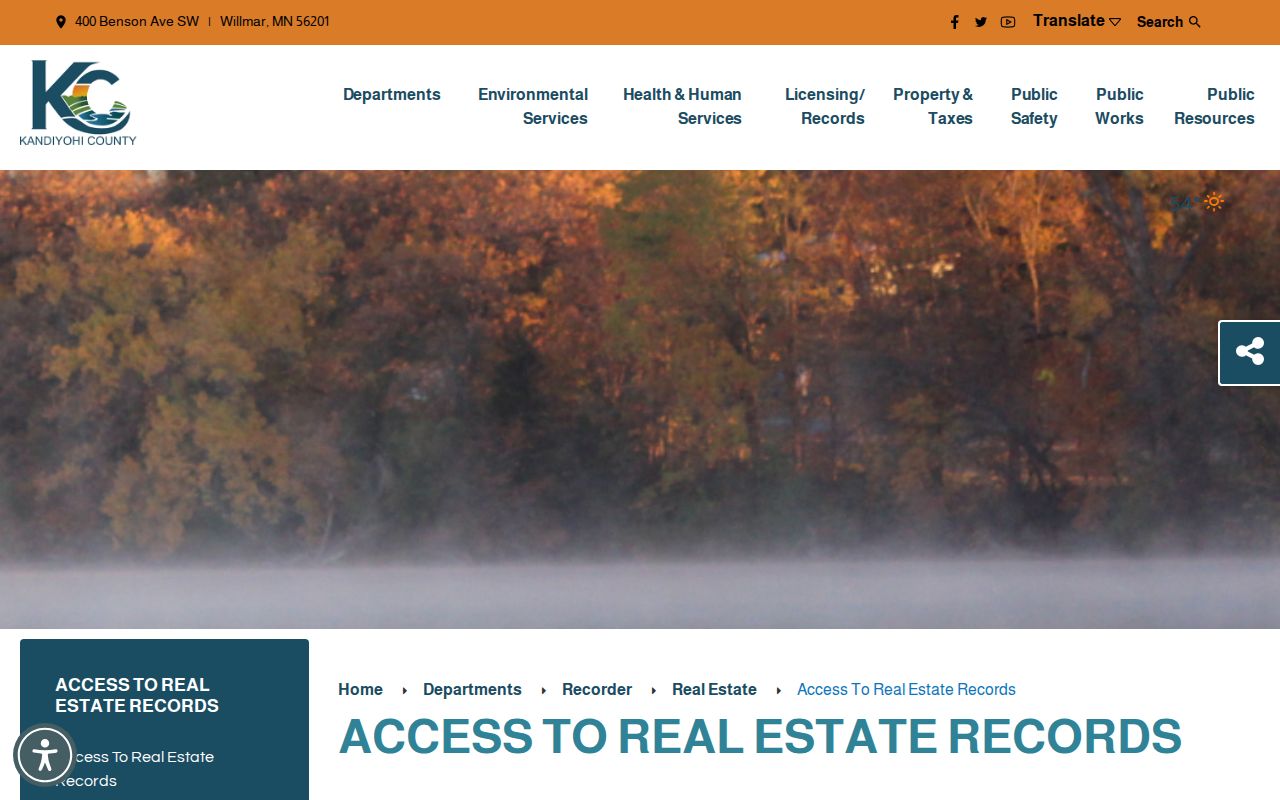
The Recorder instructions put the office computer, paid remote route, and subscription route in context before a deed search is mistaken for a complete residence record.
Note: An address history is strongest when every entry keeps its source, date, record role, and access date.
Willmar Parcel Clues Before Deeds
Begin with Kandiyohi GIS and search by address, parcel number, plat name, or section. Record the exact property number, directional, road name, ZIP, parcel ID, plat, lot and block, and legal-location elements shown by the viewer. The GIS layers can add city limits, aerials, zoning, roads, public land survey, and plat context. A current parcel popup may include a recorded-documents link, but county guidance says that popup is not a complete search of documents affecting the parcel.
Parcel continuity is the first hard problem when tracing past residents. Older deeds may use a lot and block, section-township-range, government lot, or a legal description that no longer looks like the current parcel identifier. Keep split notes and plat names alongside the address. The current GIS shows data updated in 2026, which makes it useful for identifying a parcel today but unsuitable as proof of an earlier household. Use the display's field labels and update date in any research notes.
Tracing Willmar Previous Residents
For a property title trail, use the legal description as the stable link between GIS and the Recorder. Kandiyohi County describes Tapestry searches by party name, start date, legal description, and other known information. It does not publish a verified online index cutoff or expose all field labels in the material reviewed. The Recorder offers public computers Monday through Friday from 8:00 to 4:30, Tapestry is the remote paid search path, and Laredo is a professional subscription service. When an index stops or a result is uncertain, ask the Recorder or KCHS about deed books, plats, microfilm, or older registers.
The Tapestry EON access screen is the remote route identified for county recorded-document searching. County instructions say a party-name search should be paired with an advanced legal-description search when possible.
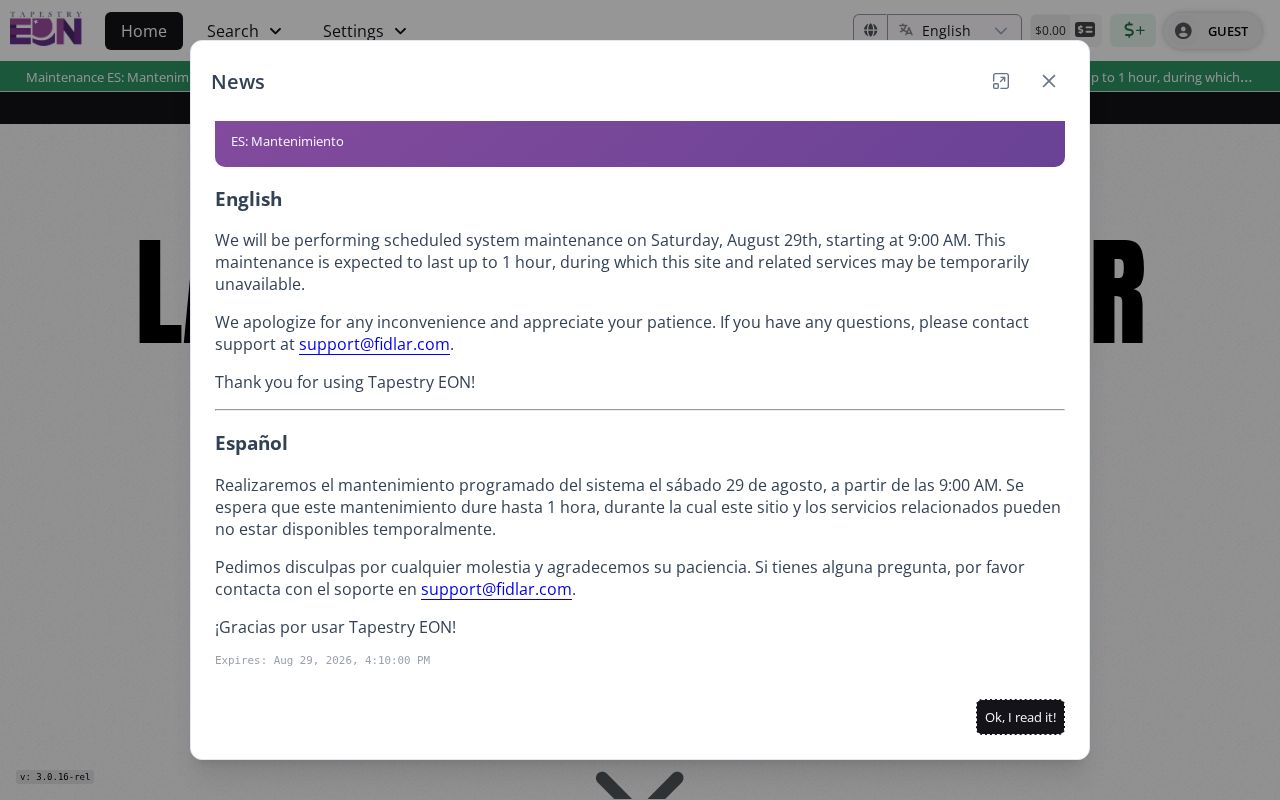
The paid index route can supply document leads, but an image, source date, and matching legal description are still needed before adding an event to a prior-owner timeline.
- Search the current address in GIS and copy the parcel ID, plat or lot and block, legal description, and any split note.
- Find the current recorded transaction through the Recorder's party-name and legal-description search concepts.
- Record the transaction date, document number, document type, parties, and legal description, then obtain the image or a county copy if the result is important.
- Use the earlier party and the same legal description to locate the preceding recorded transaction, repeating the comparison at each step.
- When the remote index cannot answer an older question, move to Recorder assistance, deed books, microfilm, KCHS, or archive records rather than guessing the link.
- Grantor and grantee
- The parties named in a recorded transfer. Preserve the role printed by the record rather than assuming it from a surname.
- Chain of title
- A sequence of recorded transactions connected by the same legal description, not merely a list of names found at one address.
- Legal description
- The lot, block, plat, or land-description language that ties records together when street numbers or parcel IDs change.
- Index and image
- An index gives a search lead; the underlying recorded image is the document that should be compared with GIS and plat information.
Willmar Tax Names and Residents
A tax or mailing name does not establish who lived at a property. Kandiyohi's public mailing layer includes address, legal-location, value, acreage, split, and parcel concepts, while its REST field labels can differ from the viewer. Mailing address, situs address, parcel owner, taxpayer, recorded grantee, and occupant are different record roles. Preserve the exact field name and tax year instead of rewriting a mailing clue as an address-history fact.
| GIS parcel layer | Shows current parcel and address context, with a dated operational layer. |
|---|---|
| Tax or mailing field | Shows an association in that tax system and year, not a complete household listing. |
| Recorded deed | Shows a recorded transaction and named parties tied to a legal description. |
| Directory entry | Shows a dated listing that may place a household name at an address. |
| Census schedule | Shows a household at a census date, subject to the release rule and enumeration context. |
Kandiyohi County also offers a free Property Fraud Alert for documents recorded with a subscribed name. The county warns of high-priced deed-copy solicitations and notes that ordinary county copies are generally about $1 per page. An alert flags a recorded-document event; it does not verify an ownership or occupancy conclusion.
Willmar Directory Dates and Census
Deeds identify recorded transactions, but directories and census schedules help describe households at specific times. The historical volumes are explained in the Willmar city directory collections. For an address trail, use the directory as a date-stamped household clue instead of trying to reconstruct its publisher history here. MNHS can search up to five selected years, making the beginning, middle, and end of a suspected interval more useful choices than adjacent years alone. Its holdings are incomplete, and an unsuccessful response can have several causes.
The MNHS directory-search request permits a city-directory search, telephone search, or both for one individual or business. Its form asks for the city or town, selected years, and additional information.
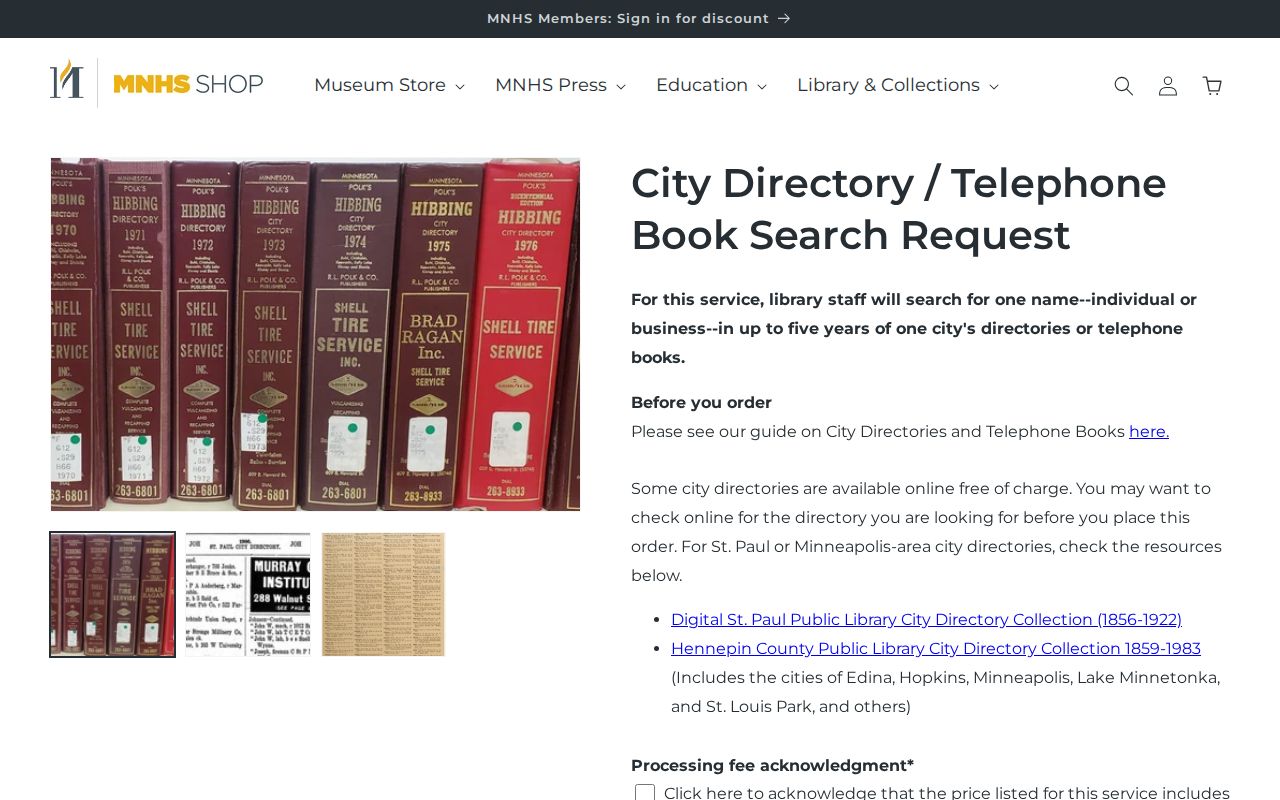
The limited five-year request is well suited to testing whether a household appears at the beginning, middle, and end of an address interval.
- Choose an address interval from a deed, newspaper, or family record and select a directory year near each edge.
- Transcribe the original listing, including initials, street form, household notation, page, and edition date.
- Compare the closest released federal census schedule as a separate dated household record, not a replacement for the directory.
- Test a move, estate, marriage, or death clue against a newspaper or a lawful vital or court route before changing the timeline.
Willmar Plats When Numbers Change
Address changes and parcel splits can make a simple number search fail. The Kandiyohi plat search allows partial plat-name searches; county guidance says a platted-area popup can show a full plat name and folder number, while “View Plat” opens the map and underlying plats can be toggled. Compare the plat name, lot and block, split notes, and legal description before deciding that an older record belongs to the current parcel.
Sanborn fire-insurance maps provide another layer of historical context. The research identifies Willmar sheets for 1893, 1899, 1909, 1914, 1925, and 1931, plus a later 1931-1946 lead. A sheet can show a building footprint, street layout, or use at its date. It does not name every resident or establish a present boundary. Pair the sheet date with a directory or newspaper date rather than treating the map as a modern parcel view.
Willmar Previous Residents in Newspapers
The Willmar Tribune title page and the broader Minnesota newspaper hub add event clues that a deed cannot supply. Search a surname with a street, an initial with “Willmar,” a business or organization name, and terms such as “sold residence,” “estate,” “married,” “visiting,” or “removed to.” Keep the title, issue date, page, and image reference. A phrase can point to a sale, death, or move, but it should not be turned into an exact move date without another record.
Title changes matter in Willmar. The research lists the Republican, Republican-Gazette, Argus, Tribune, Journal, and Wilohi among the local leads. The Tribune description also notes Swedish, Norwegian, and Danish community roots, so an OCR search should try original-language spellings, initials, hyphen variants, and community names. Those variants are research methods, not proof that differently spelled entries name the same person.
Willmar Township Records Trail
The path behind a Willmar address can extend into the surrounding county. KCHS and Southwest Minnesota State University hold copies or a master for microfilmed Kandiyohi township records, a useful route for rural-to-city movement and early local references outside a city volume. KCHS also supports early plat books and other local material. Search the township name, then retain the document or roll details before connecting it to a later city address.
The Willmar Public Library genealogy page explains that the Genealogy Collection moved to the Kandiyohi County Historical Society Museum and offers an email-request route.
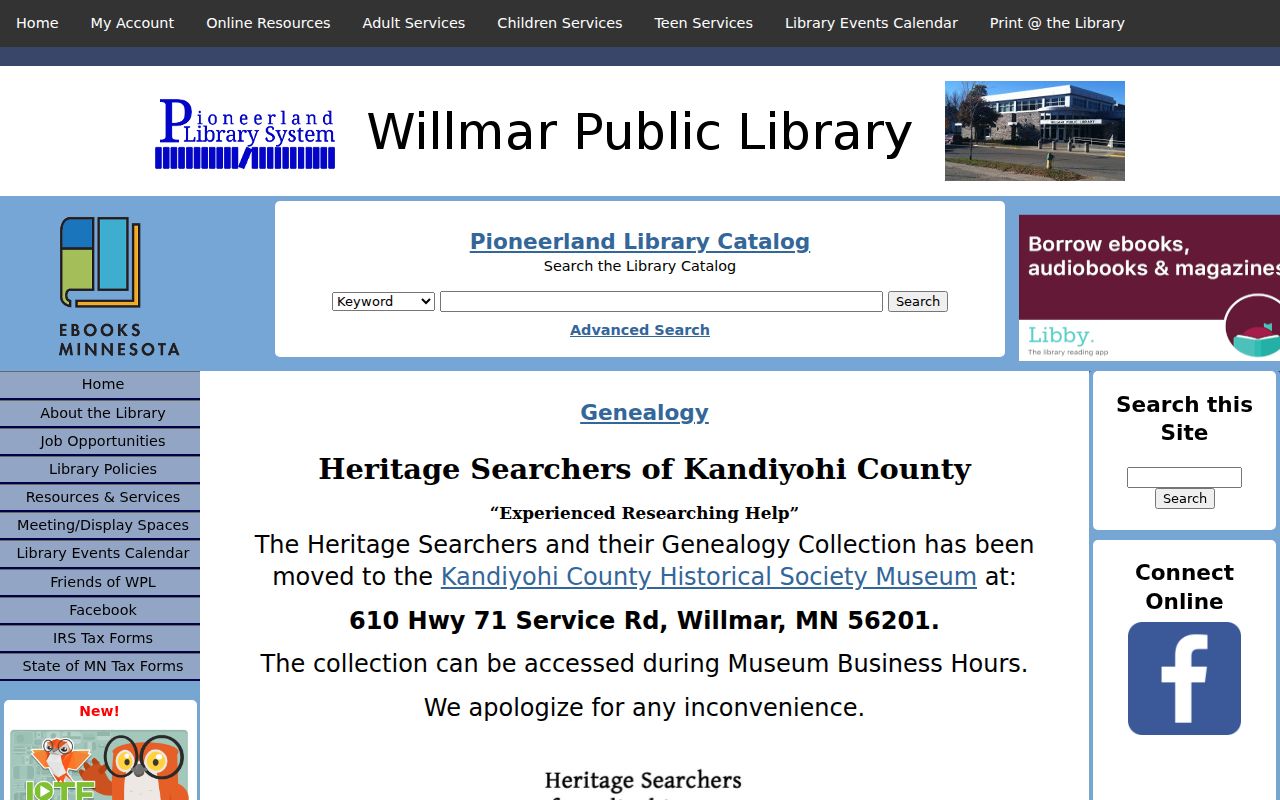
The library handoff is a practical local checkpoint when an address search needs township microfilm, an older printed source, or KCHS staff assistance.
Willmar Previous Residents: Gaps
The research did not retrieve a complete parcel-specific deed chain, a named former-resident example, an official online index cutoff for Kandiyohi deeds, a verified street-renumbering record, or a published Willmar house-history guide. Those are real limits, not empty details to fill with a plausible story. Mark the missing year or source, ask the custodian for the relevant record format, and retain the answer with the search date.
Use a two-source rule for a historical identity claim. A directory address and compatible newspaper notice, or a recorded deed and matching legal description, are stronger than a single name in a current GIS mailing field. A birth, marriage, death, or court record has its own Minnesota access rules and must be used only through the appropriate custodian route.
Lawful use. Willmar address research is suited to family history, estate questions, and property history. Do not use a historical result to track, harass, or harm a living person.